Beach wedding photographs can look effortless, but the clothing has a demanding job. Bridesmaids may cross loose sand, stand in strong sun, face a stiff sea breeze and move between a humid shoreline and an air-conditioned reception. The best beach bridesmaid dresses account for those details without losing the relaxed elegance of a coastal ceremony.
Rather than choosing solely by how a gown hangs on a model, picture the full day: the walk to the ceremony, photographs near the water, dinner on a terrace and dancing after sunset. That shift in perspective makes fabric, length and footwear choices much easier.
Start With the Actual Ceremony Location
Not every seaside venue has the same requirements. A resort lawn overlooking the ocean is different from a ceremony directly on the sand. A boardwalk may allow longer skirts and heels, while a barefoot ceremony near the tide line calls for a shorter hem and secure straps.
Ask the couple or planner where everyone will stand, how far they must walk and whether a firm pathway is available. Check the season, ceremony time and whether the reception moves indoors. Coastal bridesmaid dresses should suit the conditions people will experience, not simply the theme.
Choose Fabrics That Move Comfortably
Chiffon and Georgette
Chiffon is popular for lightweight beach bridesmaid gowns because its soft drape catches a breeze beautifully. Georgette has a slightly more textured surface and can create a similar flowing effect. Both come in different fibres and linings, so the complete dress matters more than its fabric label.
A fully lined polyester chiffon gown may look delicate but feel warm in humidity. Test a sample by walking and sitting, ideally in comparable weather. Lightweight lining is just as important as the outer layer.
Crepe and Natural-Fibre Blends
Soft crepe offers a cleaner silhouette with less fluttering, useful at windy locations. Cotton and linen blends can suit informal ceremonies, although linen-rich fabric creases easily. Viscose often drapes well but may also wrinkle. Heavy satin, bulky embellishments and thick layers are generally less practical in midsummer heat.
Check opacity in daylight. Pale fabric that looks opaque indoors can become sheer when backlit by strong coastal sun. A suitable lining or undergarments will prevent an uncomfortable surprise.
Find a Length That Works on Sand
Midi and tea-length dresses are practical on open sand. They avoid dragging through damp ground and make walking easier. Ankle-length styles offer a more formal look while keeping the hem clear of many obstacles.
Floor-length gowns can work too, particularly on a deck. Have each bridesmaid try her dress with the actual wedding footwear, then tailor the hem so it cannot catch underfoot. A dramatic train may look lovely on stone steps but become a nuisance beside waves.
Imagine the wedding party walking 40 metres across dry sand to reach the ceremony arch. A flowing midi dress with a stable neckline is often easier to manage than a narrow, floor-length gown. Testing a similar route reveals issues that a mirror fitting misses.
Consider Wind When Choosing Necklines
Strapless dresses can be beautiful, but repeated adjustments are distracting during a ceremony. Wide straps, supportive square necklines and comfortably fastened halter designs often feel more secure. Very loose sleeves may blow across faces in photographs.
Wrap dresses offer flexibility if the front overlap stays secure when walking or sitting; a discreet snap may help. Bridesmaids can wear different necklines within one colour and fabric family, making room for individual comfort and support preferences.
Build a Coastal Colour Palette
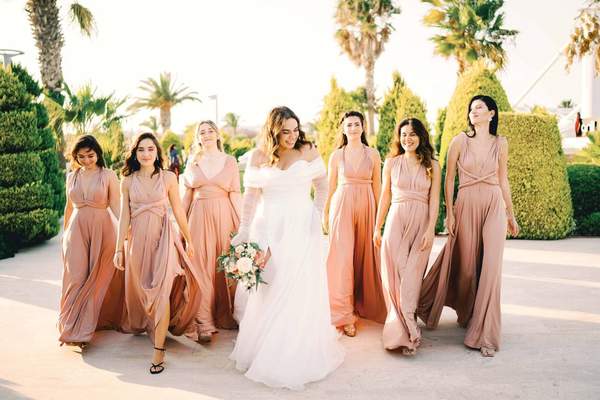
Sea-glass green, dusty blue, muted coral, sandy rose and soft terracotta complement seaside surroundings without making everyone disappear into the background. The best shade depends on the sand, water, flowers and ceremony hour. White beaches photograph differently from grey pebbles or dark rock.
Order swatches and view them outdoors in sun and shade. Very pale champagne or ivory dresses can photograph close to bridal white, so confirm these colours with the bride. Related tones can look intentional together, but give everyone a defined palette instead of vague instructions to choose “ocean colours.”
Choose Shoes for the Surface, Not Just the Dress
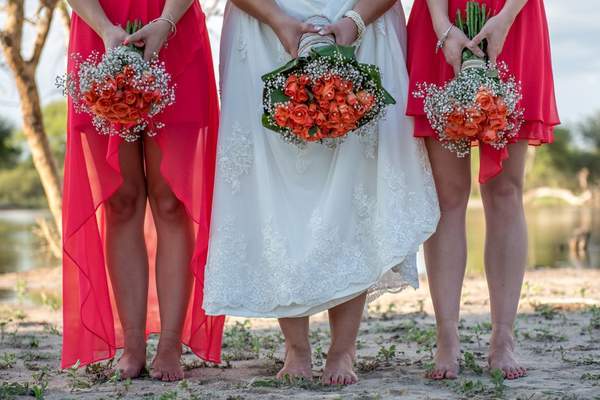
Stilettos sink into sand and can catch between boardwalk planks. Secure flat sandals, dressy flats and low block heels on firm surfaces are more dependable beach wedding attire. Bare feet may suit a ceremony on soft sand if the venue and couple permit it; bring shoes for other surfaces.
Choose sandals that stay on during a walk rather than only while standing. Consider whether saltwater could damage delicate finishes. Changing shoes for a reception on paving or grass can be a sensible compromise.
Prepare for Heat, Travel and Evening Breezes
Destination wedding party dresses need to travel well. Check care labels before packing, carry delicate gowns in garment bags and find out whether the accommodation provides a steamer. Follow fabric-care instructions, and hang outfits early to release packing creases.
Pack a small kit with fashion tape, safety pins, suitable stain remover and spare hairpins. Let sunscreen dry before dressing to reduce marks on light fabric. Hair secured away from the face may be more comfortable than elaborate loose styles when the wind rises.
Sea breezes can turn cool after sunset. Consider lightweight wraps or cropped layers in coordinating tones. Confirm each bridesmaid’s budget, fitting dates and alterations before ordering; sharing fabric swatches helps groups living in different places coordinate.
For more planning ideas, compare guides to bridesmaid dress colours, summer wedding guest outfits and destination wedding packing essentials when putting together the group’s final look.
Frequently Asked Questions
What is the best fabric for beach bridesmaid dresses?
There is no universal winner. Lightweight chiffon, georgette and soft crepe are useful options, but their linings, fibre content and construction determine comfort. Try a sample in conditions similar to the venue’s weather.
Should beach bridesmaid dresses be long or short?
Either can suit the occasion. Midi and ankle lengths are especially practical on sand. Longer gowns work best when altered for the actual shoes and walking surface, with no fabric trailing underfoot.
Can bridesmaids wear different dresses at a coastal wedding?
Yes. A consistent palette and similar fabric weight can bring together different silhouettes and necklines while allowing each bridesmaid a comfortable fit.
Are heels appropriate for a beach ceremony?
Low block heels can work on a solid deck or paved approach. For loose sand, secure flats or sandals are usually easier. Check the ceremony route and reception flooring first.
Let Practical Choices Create an Effortless Look
Beach bridesmaid dresses look their best when attendants can enjoy the celebration rather than monitor their hems, shoes or necklines. Choose fabric that suits the weather, length that suits the ground and colours tested in natural light. Thoughtful planning creates the easy, breezy effect everyone hopes to see in the photographs.