Modest bridesmaid dresses should feel like a style choice, not a compromise. A higher neckline, longer sleeves, or a less revealing back can look every bit as celebratory as a strappy gown. The challenge is finding pieces that respect each attendant’s comfort while still looking intentional together in photographs and at the ceremony.
Decide What Modest Means for Your Wedding Party
There is no universal checklist for modest formalwear. For some people, it means a covered chest and shoulders. For others, it also means an opaque fabric, a full-length skirt, or a back that stays covered without additional layers. Ask privately rather than assuming everyone has the same requirements.
When comparing covered bridesmaid dresses, look beyond the front product photograph. Check the rear neckline, side openings, skirt slits, and whether the bodice becomes sheer under bright light. A gown described as modest may still have a keyhole back or transparent sleeves. The complete cut matters more than the product label.
Necklines That Offer Coverage and Shape
High necklines without a restrictive feel
High neck bridesmaid dresses can create a clean, elongated line, especially in soft crepe or flowing chiffon. Mock necks, bateau necks, and gently draped high necklines offer different levels of coverage. A bateau neckline sits wider across the collarbone, so confirm that it meets the wearer’s specific preferences.
Pay attention to the fit when turning the head or lifting the arms. A neckline that looks elegant while standing still should not pull against the throat during conversation or dinner. Try the dress with the intended undergarments, because their straps and seams can change how the neckline sits.
Choose Sleeves for the Season and Setting
Bridesmaid dresses with sleeves come in far more styles than fitted long-sleeve gowns. Flutter sleeves provide light shoulder coverage, elbow-length sleeves have a classic feel, and full-length sleeves can suit formal or cool-weather ceremonies. Bishop sleeves add movement, though loose cuffs may need attention during meals.
For summer weddings, sleeve length alone does not determine comfort. Lightweight, breathable materials and an unrestrictive armhole can be more comfortable than tight, heavily lined short sleeves. For autumn or winter, lined sleeves may feel more substantial, but they still need enough ease for movement.
Be careful with illusion mesh and lace. A lace sleeve may reveal more skin than the wearer expects, particularly in direct sunlight. If opaque coverage is essential, seek fully lined sleeves or ask a tailor whether discreet lining can be added without distorting the design.
Fabric, Fit, and Lining Matter as Much as Coverage
Conservative bridesmaid gowns need not be bulky. Crepe often gives a smooth, structured appearance; chiffon creates softness and movement; satin offers lustre but can show pulling around fitted areas. The same fabric name can describe different weights, so order a swatch when possible and examine it in daylight.
Check whether the skirt and bodice are fully lined. Thin fabric can become translucent in backlighting, while an overly tight lining can restrict steps even when the outer skirt looks generous. A good fit should allow the wearer to sit comfortably, climb stairs, and move both arms without repeatedly adjusting the dress.
Keep the Group Cohesive Without Requiring Identical Dresses
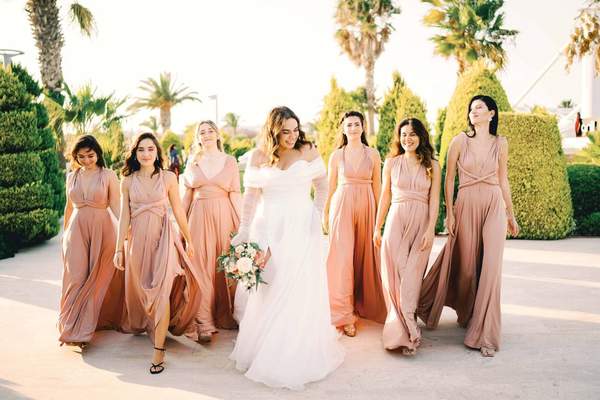
Matching every neckline and sleeve can make individual coverage needs harder to accommodate. Instead, choose a shared visual thread: the same colour, a coordinated fabric family, similar skirt lengths, or a consistent level of formality. Dresses can differ substantially at the shoulders and still read as one wedding party.
For example, three attendants might wear sage dresses in a comparable matte finish: one with a bateau neckline and full sleeves, one with a shallow scoop and elbow sleeves, and one with a high neck and flutter sleeves. Keeping the hems near the same length provides continuity without forcing identical silhouettes.
If choosing mixed fabrics, inspect swatches together under indoor and outdoor lighting. Satin reflects more light than chiffon, so two dresses sold under the same colour name may look noticeably different. A bridesmaid colour palette guide can help narrow the selection before anyone places an order.
Shop and Alter With Real-Life Movement in Mind
Before ordering, confirm the size chart using current body measurements rather than an everyday clothing size. Review the seller’s return policy, made-to-order deadlines, and alteration allowances. Custom sizing does not guarantee that a garment will arrive perfectly fitted, especially around the shoulders, bust, and sleeve openings.
At a fitting, repeat a few real wedding-day movements: sit at a table, reach forward as if embracing someone, raise your arms slightly for a group photograph, and walk up a step. Notice whether a slit opens too far or a wrap bodice shifts. A modest design is only practical if its coverage stays in place when worn.
If a nearly perfect dress needs adjustments, a tailor may be able to close a slit, raise a neckline modestly, add an opaque panel, or modify sleeves. Discuss feasibility before buying: some alterations are straightforward, while others change the balance of the garment or require matching fabric that may be difficult to source.
Make the Final Choice Together
A short group discussion can settle shared details such as shade, hem length, and budget, while individual conversations protect privacy around coverage needs. Send each bridesmaid a small set of approved styles rather than asking everyone to sort through hundreds of gowns. For more inclusive planning, a bridesmaid dress fitting guide can help the group prepare for appointments and alterations.
Allow enough time for swatches, delivery, and tailoring. The goal is not to make every person look identical; it is to make everyone feel appropriately dressed, comfortable, and part of the same celebration. A guide to bridesmaid dress lengths is useful when the wedding includes both outdoor and indoor settings.
Comfort and Cohesion Can Go Hand in Hand
The best modest bridesmaid dresses respect individual boundaries while working within the wedding’s overall look. Prioritise reliable coverage, movement, fabric opacity, and sensible tailoring; then use colour, texture, and length to connect the outfits. When everyone can participate comfortably, the wedding party looks naturally at ease together.
Frequently Asked Questions
Can modest bridesmaid dresses still look formal?
Absolutely. Structured crepe, elegant satin, considered draping, and careful tailoring can give covered dresses a formal finish. Sleeve length or neckline height does not determine whether a gown feels sophisticated.
Are high neck bridesmaid dresses suitable for summer?
They can be, especially when made from lighter fabrics with comfortable armholes and suitable lining. Consider the venue, climate, and how long the wedding party will be outdoors rather than judging comfort by the neckline alone.
Do all bridesmaids need the same amount of coverage?
No. A coordinated colour and similar formality can bring different designs together. Letting attendants choose from approved covered silhouettes is often more comfortable than enforcing one cut.
Can a regular bridesmaid dress be made more modest?
Sometimes. A tailor may be able to adjust a slit, line a bodice, or add coverage, but the garment’s construction limits what is practical. Ask for an alteration assessment before purchasing a dress that requires major changes.