Reception tables are built in layers, not by piling on decorations. The best wedding tablescape ideas combine fabric, flowers, dinnerware, lighting, and personal details while leaving guests room to eat and talk. A thoughtfully styled table should look lovely before anyone arrives and feel comfortable once the meal begins.
Start with a clear color palette, then give every item a purpose. Texture, proportion, and breathing space can make simple wedding table decor feel more polished than a crowded collection of accessories.
Plan the Table Around Your Guests
Confirm table dimensions, guest numbers, and the catering style before ordering centerpieces. A plated dinner requires space for glasses and cutlery, while family-style dining also needs room for shared dishes. Those details should shape the design from the beginning.
Long banquet tables suit repeated small arrangements; round tables often work well with one central feature. Whatever the shape, sit at a sample setting. Can you see the guest opposite you? Is there room to reach your glass? A good reception tablescape passes those tests.
Build the Look With Linens
Choose a Main Fabric and an Accent
Linens establish the mood before guests notice the flowers. Ivory or white cloths are timeless, while sage, dusty blue, oatmeal, or muted rose bring subtle color. Textured cotton and linen-look fabrics feel relaxed; smooth, crisp cloths suit a more formal setting.
On a long table, a runner creates a line for flowers and candles. It does not have to match the napkins exactly. Coordinating shades can give wedding table styling more depth. If the venue provides attractive wooden tables, leaving the wood visible with a narrow runner may look better than covering everything.
Ask for fabric samples and view them in the venue’s lighting. Check the tablecloth drop, too, particularly along the seated sides.
Layer Wedding Place Settings Thoughtfully
Begin with the dinner plate or an optional charger, add a folded napkin, and position the cutlery and glassware required by the caterer. A charger can frame a setting beautifully, but it is not a necessary extra.
Give Each Seat One Distinctive Detail
A printed menu, ceramic name tile, patterned napkin, or simple ribbon can be the focal point. Using all of them together often creates clutter. For a garden wedding, try a white plate, pale green napkin, and small cream place card beside the cutlery. It feels personal without looking fussy.
Check the arrangement with the catering team. Wedding place settings need to accommodate every course, not just look good in a photograph. Guests should never have to move decorations to find their water glasses.
Choose Centerpieces That Encourage Conversation
Flowers often define a reception table, but size is not the same as impact. Low arrangements in shallow bowls leave faces visible across the table. Tall arrangements can work when flowers rise clearly above seated sightlines on slender, stable supports. Dense flowers at face height make conversation awkward.
For long tables, try a repeating sequence of bud vases and compact floral clusters instead of one enormous arrangement. Limit the flower varieties to create a unified look, then vary stem heights gently. Keep trailing greenery away from plates, glasses, and serving areas.
Ask your florist about heavily scented varieties, falling petals, and the stability of each vessel. Seasonal flowers can add character without elaborate construction.
Use Candlelight With Care
Candlelight adds warmth to wedding table decor, especially at evening receptions. Low votives mixed with a few taller holders create gentle height changes. Clear glass looks airy, antique brass feels romantic, and matte ceramic works beautifully with modern tables.
Check the venue’s fire rules before choosing real candles. Where flames are permitted, use approved, stable holders and keep them away from foliage, fabric, and guests. Some venues require protected flames or prohibit them altogether. Flameless candles offer an alternative, particularly outdoors in windy conditions.
Remember that holders are visible before sunset, so select finishes that complement the design even when unlit.
Make Menus and Place Cards Part of the Design
Paper goods can connect the table with invitations, the seating chart, and other reception details. Repeat a typeface, color, or illustration rather than every decorative motif. Legibility matters more than elaborate lettering.
Individual menus suit multi-course meals; shared menus may work for family-style service. Place cards should be easy to spot, and table numbers should be visible from the aisle. Confirm names, dietary details, and the final menu before printing. For a coordinated event, develop wedding seating chart ideas alongside your table stationery.
A Simple Formula for Long Reception Tables
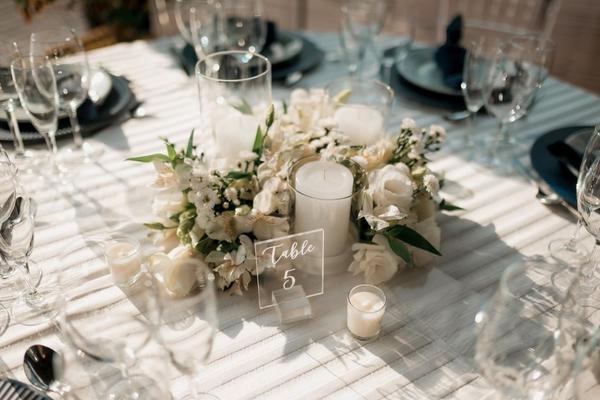
Picture a late-summer reception with ivory linen, sage napkins, and white flowers. Lay a narrow runner down the center, then arrange the actual place settings on either side. Space small bud vases along the runner, alternating them with protected votives if the venue allows candles. Place a discreet table number near the end where guests approach.
Next, test the layout with dinnerware and serving pieces. If guests will pass shared platters, remove a few vases to create landing spaces. If the table is narrow, use fewer, smaller floral clusters instead of squeezing decorations between glasses.
Photograph the mock-up while seated and from the entrance. The arrangement should feel comfortable close up and form a consistent pattern across the room. This test is more valuable than copying a photograph without checking its practical details.
Create an Elegant Look Without Overspending
Spend first on clean, well-fitting linens, functional tableware, and a cohesive centerpiece plan. Use attractive venue-provided pieces when possible and consider renting specialty items. Matching inexpensive vases can make small floral arrangements feel deliberate.
Choose one memorable element rather than several competing extras: colored napkins, seasonal flowers, or warm lighting. Repeating a single accent often creates greater impact than buying different decorations for every table. Settle your wedding color palette ideas and wedding centerpiece ideas before placing multiple orders.
Frequently Asked Questions
What should a wedding tablescape include?
Start with linens, dinnerware, cutlery, and glassware. Add a centerpiece, then consider candles, menus, and place cards if they suit your meal and budget. Every piece should serve the appearance or comfort of the table.
How do you decorate a long wedding table?
Use a repeated rhythm of small floral arrangements and lighting along the center. Keep plenty of space for place settings and, if needed, shared serving dishes. A narrow runner can visually connect the pieces.
Are tall or short wedding centerpieces better?
Both can work. Short arrangements usually protect sightlines naturally. Tall centerpieces should keep the flower mass above seated eye level with clear views beneath. Test them while sitting down.
How can I make wedding tables look elegant on a budget?
Choose a restrained palette, use simple matching vessels, and focus on one beautiful detail per setting. Consistency, tidy linens, and enough space around each plate matter more than expensive accessories.
Bring Every Layer Together
The most inviting wedding tablescape ideas balance appearance with the reality of a shared meal. Linens establish the palette, wedding place settings provide function, centerpieces create character, and light and stationery add personality. Build one complete sample, make adjustments from a guest’s point of view, and carry that successful combination across your reception.