A beach wedding makes a beautiful backdrop, but it asks more of a groom’s outfit than a ceremony indoors. Sunlight can be intense, a sea breeze can rearrange a collar, and shoes that look perfect on a hotel floor may sink into soft sand. The best beach wedding attire for the groom balances the dress code with the setting: breathable tailoring, a comfortable shirt, sensible footwear, and deliberate finishing touches.
First, find out whether the vows happen on soft sand, a boardwalk, or a resort terrace. That detail should shape your choices before you pick a suit.
Dress for the Ceremony, Not Just the Scenery
“Beach wedding” is a location, not a dress code. A formal sunset ceremony at a coastal hotel may call for a complete suit and tie. A relaxed afternoon gathering with chairs on the sand might suit tailored trousers and an open-collar shirt. Check the expected formality, then adapt fabric and footwear to the conditions.
Think about the reception too. If the ceremony is outdoors but dinner takes place in an air-conditioned ballroom, a jacket you can remove and put back on is more practical than an outfit designed around going barefoot all evening.
Choose Fabric Before Colour
Linen and Linen Blends
A linen groom suit is a natural choice for warm coastal weather because linen is breathable and absorbs moisture. Its characteristic creases are part of the look, although a heavily wrinkled jacket can appear untidy in photographs. A linen-cotton blend may provide a smoother finish, depending on its weave and construction.
Look beyond the fabric label. A heavily lined linen jacket can feel warmer than a lightly constructed jacket in another fabric. Try the outfit on, raise your arms, sit down, and check whether the shoulders and waistband remain comfortable.
Lightweight Cotton and Tropical Wool
Cotton works for a semi-formal beach groom outfit, especially in a breathable weave. For a dressier resort event, lightweight tropical wool is another option: an open weave and tailored drape can look sharper than rumpled linen. Comfort depends on lining, weight, fit, and humidity, not just the fibre.
Find the Right Suit Shape
For relaxed coastal groom style, choose a jacket with soft shoulders, minimal padding, and a clean fit through the chest. Trousers should allow movement and sit neatly over the shoes. Extremely slim cuts can feel restrictive in heat, while oversized tailoring may look accidental rather than easygoing.
A stone or pale-grey two-piece suit is versatile for a semi-formal ceremony. For a casual event, tailored linen trousers with a complementary shirt may be enough. A waistcoat preserves a dressed-up appearance after the jacket comes off, but adds another layer. When comparing options, a guide to summer wedding suits for men can help distinguish relaxed tailoring from traditional styles.
Pick a Shirt That Works With the Jacket
A white or ivory cotton shirt is dependable, while pale blue adds subtle contrast against tan tailoring. Linen shirts feel relaxed but crease readily; choose a collar that holds its shape. Check for transparency in bright daylight before committing to a thin white shirt.
An open collar suits many informal ceremonies. For beach formal, a light tie may fit the occasion better. Test the combination outdoors: wind can lift an unbuttoned collar or repeatedly move a loose tie. Avoid stiff, heavy neckwear that clashes with the setting.
Shoes: Sand Changes the Rules
Footwear is where attractive destination wedding attire can become impractical. On firm paths or a resort deck, leather loafers, lightweight derbies, and smart woven shoes look polished. On deep sand, narrow heels and slippery soles are difficult to manage. Choose stable footwear and confirm whether the venue has rules for ceremony shoes.
Consider a two-shoe plan. A groom marrying on open sand might walk to the ceremony in neat sandals, then change into tan loafers for portraits and a paved-terrace reception. Bare feet may suit an explicitly casual ceremony, but arrange somewhere to clean off sand before putting shoes back on.
Break in your footwear beforehand. The route from the changing room may include gravel, wet decking, or uneven steps, not just picturesque sand.
Colours That Work in Coastal Light
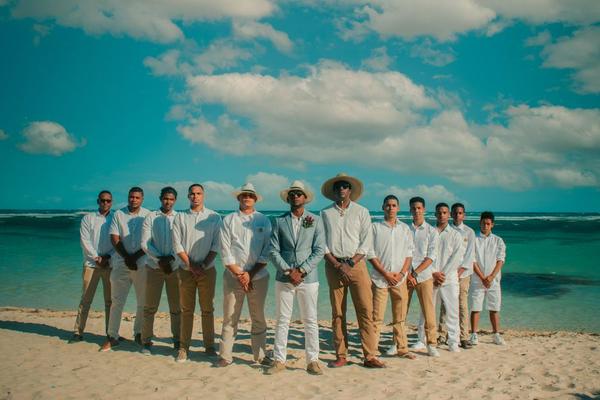
Sand, beige, stone, light grey, and muted blue complement coastal surroundings without competing with them. Sage or warm taupe can also look refined. White and ivory may suit the groom, but coordinate with the partner’s outfit so the palette feels intentional.
Photograph your suit and shirt together in daylight. Two pale shades that seem distinct indoors can blend under strong sun. The groom can stand apart from his attendants through a different suit shade, textured tie, or boutonniere rather than identical outfits. A guide to coordinating groom and groomsmen outfits can help refine that balance.
Make the Outfit Survive the Whole Day
Steam or press garments according to their care labels after travelling, then hang them with room to avoid new creases. Bring a spare shirt if the ceremony and reception span a hot afternoon. Ask someone to hold the jacket until just before portraits if the schedule allows.
Keep accessories purposeful. A pocket square or boutonniere adds personality, but large flowers can wilt in the heat. Secure loose pieces against wind, and apply sunscreen early enough to avoid transferring it onto pale collars. If formality remains uncertain, a guide to men’s wedding dress codes can help determine whether a tie or full suit is appropriate.
Frequently Asked Questions
Does the groom need a full suit for a beach wedding?
Not always. Beach formal generally calls for a complete, lightweight suit, while casual sand ceremonies may allow tailored trousers and a smart shirt. Follow the stated dress code rather than assuming every beach event is informal.
Is linen too wrinkled for wedding photographs?
Linen naturally creases, which can suit a relaxed setting. Good tailoring, proper fit, and careful pressing keep the look intentional. Choose a linen blend or lightweight wool if you prefer a crisper finish.
What shoes should a groom wear on sand?
Stable, comfortable footwear is more practical than hard-soled dress shoes on loose sand. Smart sandals may suit casual vows, while loafers work better on firm surfaces. Discuss barefoot plans and venue rules beforehand.
Can a groom wear shorts to a beach wedding?
Only when the celebration is explicitly very casual and the couple agrees. Tailored lightweight trousers are usually safer: they suit photographs, the ceremony, and a dressier reception without an outfit change.
Final Thoughts
The best beach wedding outfit is not necessarily the lightest or most casual. It matches the ceremony, moves comfortably, handles the ground underfoot, and feels like the groom. Choose breathable fabric, test the full look in daylight, and plan the transition from sand to reception. Those decisions matter more than any single accessory.